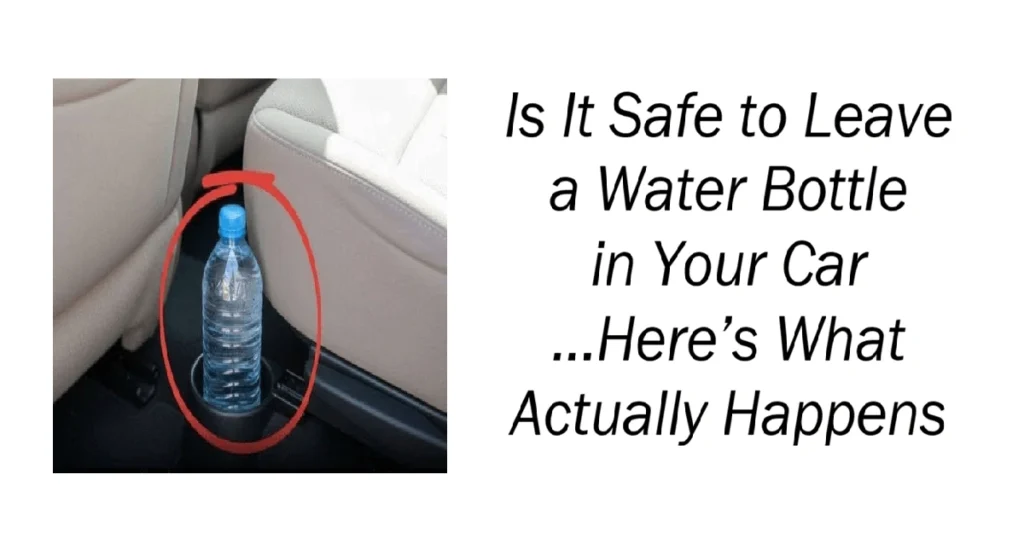
It’s something most of us have done without thinking twice—leaving a water bottle in the car between errands or overnight. It feels harmless. Convenient, even.
But when temperatures rise, that simple habit becomes a bit more complicated.
You may have seen alarming headlines online, some of which exaggerate the risks. Still, experts agree on one thing: heat does change what’s happening inside that bottle—and it’s worth understanding how.
Your Car Heats Up Faster Than You Think
On a warm day, the inside of a parked car can quickly turn into something like an oven. Temperatures can climb well above 60°C (140°F), especially in direct sunlight.
That kind of heat doesn’t just make your steering wheel uncomfortable—it creates the perfect conditions for chemical changes and bacterial growth inside a water bottle.
What Happens to the Plastic?
Most disposable water bottles are made from PET plastic. When exposed to high heat for extended periods, the material can begin to degrade slightly.
This may lead to tiny amounts of chemicals—such as antimony or compounds related to BPA—leaching into the water.
Now, to keep things in perspective:
these amounts are generally very low and not considered immediately harmful.
However, repeated exposure over time is where some experts start to raise concerns.
The Bigger Issue: Bacteria
Surprisingly, the more immediate risk isn’t the plastic—it’s bacteria.
Once you’ve taken a sip from a bottle, bacteria from your mouth enter the water. Under normal conditions, that’s not a big deal.
But in a hot car?
That warm environment becomes ideal for bacteria to multiply quickly.
So a half-finished bottle left in your car for hours (or days) can turn into a small breeding ground for microbes.
Why the Water Starts to Taste “Off”
Even if the water isn’t unsafe, you might notice something else first: the taste.
Heat can affect the flavor in a few ways:
- Plastic compounds subtly alter the taste
- Stagnant water loses its freshness
- Warm conditions accelerate overall degradation
That slightly odd or stale taste is your first clue that the water isn’t at its best anymore.
Sealed vs. Open Bottles: A Big Difference
Not all bottles carry the same level of risk.
- Sealed bottles: Generally low risk, even if left in a hot car for a short time
- Opened bottles: Higher risk due to introduced bacteria
So that unopened bottle you forgot in the back seat? Probably fine in the short term.
That half-drunk one in the cup holder? Much more questionable.
Reusing Bottles Can Make It Worse
Refilling single-use plastic bottles might seem practical, but it can add another layer of risk—especially in heat.
Over time:
- Tiny scratches inside the bottle can trap bacteria
- A thin layer of microbes (called a biofilm) can develop
- Heat speeds up this entire process
This makes reused disposable bottles less hygienic, particularly when left in warm environments like a car.
What Experts Suggest Instead
If you want to play it safe, a few simple habits go a long way:
- Avoid leaving water bottles in your car for extended periods
- Don’t drink from bottles that have been sitting in heat for hours or days
- Use reusable bottles made from stainless steel or glass
- Bring fresh water instead of relying on old bottles
These are small changes—but they make a noticeable difference.
The Bottom Line
Leaving a water bottle in your car isn’t instantly dangerous. It won’t suddenly turn toxic overnight.
But it’s also not ideal.
Heat can affect both the quality of the water and the cleanliness of the bottle—especially if it’s been opened or reused.
So the next time you spot that bottle sitting in your car after a hot day, it’s worth asking:
Is it really worth the risk—or just easier to grab a fresh one?
When it comes to something as simple as drinking water, a little caution goes a long way.