It began with a single photo.
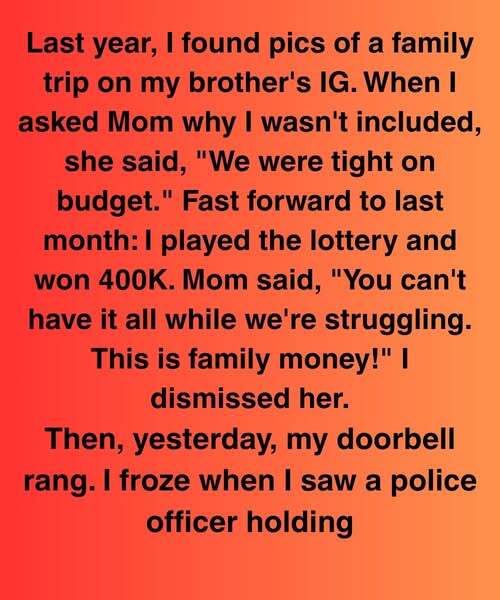
Last year, while scrolling through her brother’s social media, she stumbled across pictures of a family vacation she never knew existed — her mother, her siblings, their partners, and even distant cousins smiling together on sunlit beaches, eating at restaurants she’d only ever seen online. Every image felt like a reminder of how easily she had been forgotten. When she asked her mother why she hadn’t been invited, the answer was simple and sharp: “We were tight on budget, sweetheart. You understand.”
She did understand — or at least she thought she did. She worked hard, lived modestly, and rarely asked for much. But that explanation lodged itself deep in her chest, a quiet ache that wouldn’t go away. It wasn’t the money. It was the message.
For months afterward, she kept her distance. Family group chats went silent on her end. She focused on her job, her small apartment, and the little goals that kept her grounded — saving enough for a down payment someday, traveling on her own terms, and reminding herself that she could create happiness without validation from anyone.
Then, one ordinary afternoon, her life shifted in the most unexpected way.
She stopped at a convenience store after work, half-exhausted, half-distracted. The cashier smiled and mentioned the lottery jackpot. She laughed, grabbed a single ticket, and stuffed it into her coat pocket. It wasn’t a plan — just a whim.
Two days later, while sipping coffee and checking her emails, she remembered the ticket. The numbers blinked back at her one by one — and then her heart stopped. They all matched.
Four hundred thousand dollars.
At first, she didn’t believe it. She read and re-read the numbers, convinced she’d made a mistake. Then, slowly, reality dawned. The impossible had happened. She had won.
News travels fast in families — especially ones that never called before but suddenly found reason to. Her phone lit up within hours. Her brother’s name appeared first, followed by her mother’s, and then relatives she hadn’t heard from in years.
Her mother’s voice over the phone was filled with excitement. “We’re all so happy for you, sweetheart! This couldn’t have happened to a better person.”
But within minutes, that warmth shifted into something else — expectation.
“You know, since we’re family, we’ll all benefit from this, right?” her mother added casually. “After all, we’ve always supported one another.”
The irony was bitter. She remembered sitting at home during their “budget vacation,” scrolling through pictures of a family that hadn’t included her. Support had always felt one-sided.
Still, she stayed calm. “Mom, I’ll make sure to use it responsibly. I have plans to pay off debts and maybe start saving for a home.”
Her mother sighed, clearly displeased. “That money isn’t just yours. We’re struggling, and it’s not fair for you to keep it all. You know how family works.”
She wanted to remind her mother how family had worked when she was left behind — how easy it had been to exclude her when it was inconvenient. But she didn’t. Instead, she simply said, “I love you, but this time, I’m taking care of myself.”
The following days were filled with tension. Relatives began hinting about their “urgent needs.” Someone even suggested she should transfer the winnings to her mother so the “family could manage it together.” The pressure grew, but so did her resolve.
Then came the knock.
It was a quiet afternoon. She was home alone, sorting through paperwork related to her prize, when the doorbell rang. Peering through the peephole, she froze — a police officer stood outside.
Her pulse quickened. A dozen fears flooded her mind. Had someone tried to claim her winnings? Had there been some kind of mistake?
She opened the door cautiously.
“Good afternoon,” the officer said politely, handing her an envelope. “You’re not in any trouble. This is just official paperwork related to your lottery claim. I’m required to verify your signature in person.”
She blinked, stunned. The officer smiled kindly. “Congratulations, by the way. Not something we see every day.”
She exhaled slowly, laughter bubbling out from relief. “Thank you, officer. You just gave me my heartbeat back.”
He chuckled and tipped his hat before leaving.
When she closed the door, she leaned against it, her mind racing. The moment was small, but it hit her hard. Not every knock brings trouble. Not every demand deserves a yes.
She had spent years saying yes — to invitations that left her feeling invisible, to family members who took but rarely gave, to moments that drained her spirit. But this time, she had a chance to change the pattern.
That night, she made a plan.
Instead of impulsively spending or giving the money away to ease guilt, she opened a savings account, met with a financial advisor, and started setting boundaries that had been missing her entire life. She paid off her credit cards, set aside an emergency fund, and began looking at small properties in quiet neighborhoods.
Her mother’s calls became less frequent once she realized there would be no shared “family fund.” A few relatives stopped reaching out entirely. It hurt, but it also brought clarity. For the first time, her life felt peaceful — quiet, steady, hers.
Weeks later, she received a handwritten card in the mail. It was from her brother.
“Hey sis,” it read. “I know things have been weird. I just wanted to say I’m sorry for how we made you feel. You deserved to be included. Maybe one day we can make it right.”
She smiled. Forgiveness didn’t erase the past, but it softened it.
She didn’t reply right away. Instead, she placed the card on her desk, next to the official lottery letter that had changed her life, and whispered a quiet thank-you — not for the money, but for the lesson.
Money, she realized, doesn’t change people. It reveals them.
And boundaries don’t create distance. They create peace.
When she heard the doorbell ring again weeks later — just a delivery this time — she smiled instead of worrying. Because she finally knew that not every ring demands an answer. Sometimes, the only person you owe a response to is yourself.